From Tweets to Streets: A Kenyan Reckoning Told From Afar

“It’s Ojwang,” my mum said. “I have to stay online.”

I didn’t think a phone call could carry so much weight. My mum was calling from Mbita-Kenya, pacing in the house, while I was thousands of miles away—across borders, time zones, and seasons. She had barely slept. “I need to follow this Ojwang story,” she said, pausing every few seconds to refresh her Twitter—now X—feed.

A few hours later, my boyfriend called from another country. He had been following the Kenyan news all day, as he often does. When I visited him some months ago, I noticed how he immersed himself in it—streaming local channels, flipping between NTV, Citizen, and even lesser-known YouTube political panels. It was his way of staying connected. On this call, his voice carried more than just concern. “I just need to say it out loud,” he told me. “Imtoke.” That Swahili word didn’t just express anger; it carried the weight of frustration and fatigue.

Then came my mum’s second call, this time more anxious. “Your brother hasn’t come back. He left yesterday morning and isn’t picking up his phone.” She tried to sound calm, but I could hear the worry beneath her words. “There have been kidnappings and missing persons cases,” she whispered. “I’m really worried.”

The death that changed the conversation

Albert Ojwang was not a public figure in the traditional sense. He was a teacher and a writer, known for his honesty and boldness. Earlier this year, he had shared a post critical of Deputy Inspector-General Eliud Lagat, raising concerns about corruption. Not long after, he was found dead in a Nairobi police cell.

The official explanation pointed to a fall, but the postmortem suggested otherwise: bruises, head trauma, and neck injuries. CCTV footage from the police station had reportedly been altered. What began as a social media post had ended in tragedy, and with it came a wave of grief and questions.

A movement beyond one man

The protests that followed Ojwang’s death reflected more than the loss of one life. Crowds gathered in Nairobi, Mombasa, Kisumu, Nakuru, and other towns, demanding answers. The chants—“Justice for Ojwang!” and “Stop Killing Us!”—spoke to a broader frustration with patterns of injustice.

From where I was, I watched the news late into the night. My boyfriend did the same, and we exchanged calls between updates. We tried to make sense of it, to process the scenes unfolding on our screens.

During one of the demonstrations, a young hawker named Boniface Kariuki was fatally shot. The government responded by arresting two police officers, and Deputy Inspector-General Lagat stepped aside as investigations began. Yet for many, these actions felt like only the beginning of a much longer conversation about accountability.

Echoes of 2024

It wasn’t the first time the streets filled with voices demanding change. Just a year earlier, in 2024, young people—especially Gen Z—had led nationwide protests against a Finance Bill that many felt placed an unfair burden on ordinary citizens. The demonstrations were as much about economic policy as they were about trust, transparency, and inclusion.

What made that moment remarkable was how seamlessly digital organizing turned into real-world action. Messages shared on social media became marches. Live streams became evidence. The protests made an impact—the bill was eventually withdrawn.

Where we are today

Ojwang’s death has brought that spirit back to the surface, but with deeper questions about what has changed and what remains. The Finance Bill for 2025 has passed, albeit with some amendments following public feedback. Certain clauses, including ones linked to data privacy concerns, were dropped. Yet, for many, the sense of vulnerability persists—whether in the streets, online, or at home.

My mum now hesitates to let my brother stay out late. “They’re picking up young men,” she told me quietly. “Sometimes, for nothing more than being in the wrong place at the wrong time.” Each time I call and he answers, it feels like a small relief.

Signs of resilience

Despite the uncertainty, what stands out is how young people continue to find ways to engage. From peaceful demonstrations to legal challenges, from creative digital advocacy to community organizing, they are reshaping how citizens participate in national dialogue. The calls for accountability, fairness, and reform remain steady.

What is clear is that this is no longer just about individual incidents. It’s about a collective journey, a nation grappling with difficult questions, and a generation finding its voice.

A shared story

Though I am far from home, I feel part of this story with every call I make, every update I follow, and every conversation I have with loved ones. My mum is living it. My boyfriend follows it closely. My brother navigates it daily.

Distance can feel isolating at times. But it has also shown me that the desire for justice, dignity, and peace crosses borders. It lives in the voices that refuse to go quiet, in the families who worry and hope, and in the countless small acts of courage that are shaping Kenya’s future.

Whispers from Warzones: Voices the World Must Hear

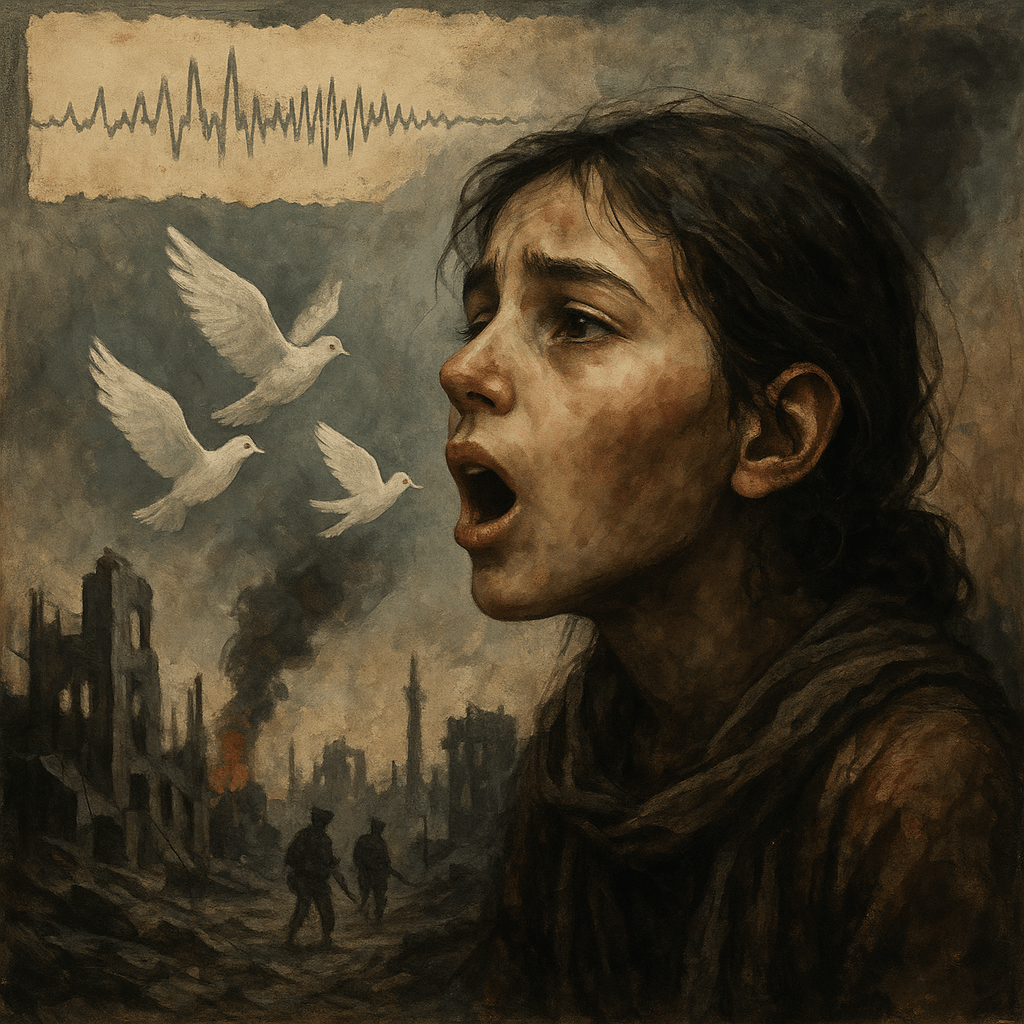
Picture credit:AI generated

At dawn in Sudan’s Darfur region, Mariam tightens a threadbare scarf around her shoulders. Around her, smoke curls from burned homes, and gunfire echoes over the dusty plains. The war that erupted between the Sudanese Armed Forces and the Rapid Support Forces has now plunged the nation into one of the world’s most catastrophic humanitarian crises. In some regions, famine has begun, quietly claiming lives, especially of children. Aid groups are pleading for safe corridors, but violence and looting make deliveries almost impossible (United Nations, 2024).

Meanwhile in Gaza, 14-year-old Omar scrawls poetry in a tattered notebook, the walls of his school, what’s left of it, scarred with shrapnel. More than 50,000 Palestinians have been killed in the Israeli military operation launched after the October 2023 Hamas attacks, with women and children making up a devastating portion of the casualties (UN OCHA, 2025). Starvation is now a weapon of war, hospitals are nonfunctional, and children like Omar are growing up too fast, too soon, under the shadow of drones.

Thousands of miles away  in the mineral-rich hills of eastern Congo, Amina, a schoolteacher turned refugee, now teaches children by drawing in the dust. The M23 rebel group, backed by Rwandan military support, has overrun towns in North Kivu. Violence and displacement have uprooted nearly 700,000 people this year alone (Human Rights Watch, 2025). Children go missing during attacks. Schools, clinics, and even UN shelters have come under fire.

In Myanmar, Ko, a rice farmer, watches his fields rot under the monsoon rain. The junta’s brutal campaign against opposition forces has bombed entire villages. Schools are militarized, hospitals raided, and millions displaced, with little hope of return (International Crisis Group, 2025).

In Iran and Israel, the tension crackles like electricity in the air. After a series of drone and missile strikes between the two nations, dozens have died, oil depots have exploded, and civilians huddled in bunkers. Each act of retaliation fuels the next. Though world leaders have called for calm, both nations remain defiant (The Guardian, 2025; Associated Press, 2025).

The Human Cost

What unites Mariam, Omar, Amina, Ko and millions more isn’t just suffering. It’s invisibility. Each lives in a war that the world occasionally notices before moving on. But these are not isolated tragedies. Conflicts today are more interconnected than ever. Food shortages in Sudan affect global grain prices. Bombings in Gaza inflame tensions across the Middle East. The Congo’s instability slows electric vehicle supply chains globally.

But what’s Being Done?

Some governments and international organizations are responding. The UN has attempted to broker ceasefires in Sudan and pushed for humanitarian access in Gaza. Humanitarian agencies are delivering what aid they can, often at great personal risk. Peacekeeping operations in Congo and diplomatic pressure on Myanmar have slowed some violence, but not nearly enough (UNHCR, 2025; Amnesty International, 2025).

France, Germany, and the UK have condemned the Iran–Israel escalation, urging de-escalation through backchannel diplomacy (Reuters, 2025). Meanwhile, the UN Security Council has extended sanctions on arms sales to South Sudan, hoping to prevent yet another civil war (United Nations, 2025).

Civilians and activists around the world are also protesting against the conflict. The latest being activist chanting at Schiphol airport, Amsterdam “One we are the People; two we won’t be silenced; three let’s stop the bombing now!now! now!” before  heading to Egypt to join thousands planning to march on foot to the besieged enclave (Aljazeera news,2025)

But there is a growing call for more preventive diplomacy, not just reacting after violence erupts, but investing in peace before it does. This includes funding education, supporting youth leaders, protecting environmental resources that often trigger local conflicts, and including women in peace talks, not just as victims, but as negotiators (UN Women, 2025).

What Can We Do?

The truth is, we’re not powerless. Citizens can pressure their governments to fund peacebuilding, not just weapons. Donors can prioritize women-led initiatives in war-torn communities [I remember back in my undergraduate class, learning on the importance of women in peacebuilding but surprisingly this is something that is not much practised]. Schools and universities can educate on the causes of conflict and build empathy across cultures. And we, as individuals, can amplify the stories of people like Mariam, Omar, and Ko so they are not forgotten.

Because every time we allow a war to become a statistic, we let a life slip quietly from view. 

References

Amnesty International. (2025). Myanmar: Civilians caught in crossfire as junta escalates attacks. https://www.amnesty.org

Associated Press. (2025, June 15). Death toll grows as Israel and Iran trade attacks for third day. https://apnews.com/article/291df01b03179cd414db21ca33791b39

Human Rights Watch. (2025). DR Congo: Civilians at risk as rebels advance in eastern provinces. https://www.hrw.org

International Crisis Group. (2025). Myanmar’s slow descent into state failure. https://www.crisisgroup.org

Reuters. (2025). UK, France urge calm as Iran-Israel conflict escalates. https://www.reuters.com

The Guardian. (2025, June 15). Iran and Israel threaten escalation as global powers call for restraint. https://www.theguardian.com

UNHCR. (2025). Global displacement hits a new record as conflicts surge. https://www.unhcr.org

UN OCHA. (2025). Occupied Palestinian Territory: Humanitarian needs overview. https://www.unocha.org

UN Women. (2025). Women’s role in peacebuilding: From words to action. https://www.unwomen.org

United Nations. (2024). Sudan: One year of war and humanitarian collapse. https://www.un.org

United Nations. (2025). Security Council extends arms embargo on South Sudan. https://www.un.org

“Reducing Dollar Dependence: Why and How Countries are Making the Shift?”

In the past few decades, the United States dollar has dominated the global currency market as the preferred medium of exchange in international trade and investments. However, over the last few years, more and more countries have started reducing their dependence on the dollar and seeking alternatives. This shift is driven by several factors, including the rise of emerging economies, geopolitical tensions, and concerns over U.S. monetary policy.

In this article, I investigate the reasons behind this trend and how it is impacting the global financial landscape.

Section 1: The rise of emerging economies and the need for diversification since the turn of the century. Global economy has undergone a major transformation, with emerging economies, particularly China, India, and Brazil, becoming major players in world trade and investment. These economies have growing reserves of foreign exchange, but they are heavily reliant on the dollar for transactions. The dependence on the dollar exposes them to currency risk, particularly in times of financial instability, and also limits their power in global economic decision-making. Therefore, to reduce these risks, these countries have been increasing their holdings of alternative currencies (such as Euros, Yen, and Yuan), diversifying their reserves, and establishing bilateral currency swap agreements with other countries.

Section 2: Geopolitical tensions and the rise of Nationalism. Another driving force for countries to move away from the dollar is geopolitical tensions, particularly the ongoing trade wars and sanctions imposed by the United States. The political and economical dependence on the dollar makes these sanctions more severe on the countries involved. However, sanctions have also motivated countries such as Russia, Iran, and Venezuela to seek alternative means of payment and trade, such as using cryptocurrencies, digital currencies, or creating alternative payment systems.

Section 3: Concerns over U.S. monetary policy. Global concerns over U.S. monetary policy and its potential negative impact on the global economy have also led to a shift away from the dollar. For instance, the loose monetary policy of the U.S. Federal Reserve, which involves printing money to buy back government bonds, raises concerns over inflation and the resulting depreciation of the dollar. This has forced several countries, particularly Russia and China, to explore the possibility of creating an alternative international monetary system that will reduce the dominance of the U.S. dollar.

The trend towards reducing dependence on the U.S. dollar is a significant shift in the global financial landscape. The reasons behind this trend are multi-faceted and driven by a range of factors including geopolitical tensions, concerns over U.S monetary policy, and the rise of emerging economies. Although it is unlikely that the dollar will lose its significance anytime soon, the trend towards diversification of reserves, bilateral trade in alternative currencies, and the rise of alternative payment systems is likely to continue. As a result, the global financial landscape will become more complex, diverse, and potentially unstable.

Photo credit: Visual Capitalist-https://www.visualcapitalist.com/de-dollarization-countries-seeking-alternatives-to-the-u-s-dollar/

Ever been sick in the Netherlands?

A visit to the hospital is one of the experiences I believe most of us, if not all, have experienced. You have either sought medical treatment or accompanied a loved one to a hospital. Personally, failing health has sent me to the hospital several times, or perhaps the healthcare system where I come from encouraged me to frequently use the available resources, even when my body could fight the illness on its own. Societal health care is a discussion I have been having for over a year.

Pakorn Kumruen/EyeEm/Getty Images (https://hbr.org/2019/10/4-principles-for-improving-health-care-around-the-world)

Coming from Kenya, and currently living in the Netherlands, the differences in the healthcare services have given quite a shock value. As a newcomer in Netherlands, you are required to first register with a General Practitioner (GP), or else you cannot access the health care services unless it is a matter of life and death. Even after registration, if you fall ill, you cannot just visit your GP; you have to first call and schedule an appointment. This appointment is given based on the available openings in the doctor’s schedule, usually a few days to weeks later. When you seek urgent medical attention, you have to call either your GP or an emergency line and explain your symptoms to them, during which they will establish if it is indeed serious and needs urgent attention, after which you get the first available appointment to visit a nearby urgent care facility called Spoedpost.

One Saturday morning, I woke up with severe chest pain. Every breath I took increased the intensity of the pain; even a slight shift in my sitting or laying position would induce the chest pain. I tried calling my GP only to realize that GPs only work on weekdays from 8am -4pm. So the alternative was to find the health service emergency number. You know how when you call a company or institution for something, the automated answering service tells you which number to dial in order to access the department that you are interested in. Here, the official language is Dutch, so if you are a foreigner, this will be a challenge for you; your only option is to guess the numbers hoping you will finally get someone to speak to and explain your circumstances. Only in very rare instances have I come across an automated answering service here that has English as an optional language. But this is to be expected given the citizens have to be able to use these services, and for them, Dutch is the preferred language, sometimes the only language they understand.

A bit of digress. Back to my experience. I finally got to speak to one of the urgent healthcare agents. I explained my symptoms to her believing that she would immediately schedule me for an appointment, but to my utmost surprise, she was skeptical about my urgent care need. I had to tell her that I felt like if I did not get immediate medical attention, there was a high probability that I would die. I believe this convinced/persuaded her to schedule me for an appointment at 3pm, 8 hours later (note that I called the urgent line at 7am).

Across the ocean, in Kenya, my experience was different. Whenever I fell sick, I would visit any hospital within my region. I was not restricted to a GP and I could visit a hospital any hour of the day. It was not limited to regular work hours on weekdays. The health care service in Kenya is available to everyone just as it is in the Netherlands. Kenyans have universal healthcare insurance under NHIF which covers everyone. Additionally, individuals enroll in private insurance to supplement the NHIF. With this, one is able to access premium health services or visit premium hospitals. In the Netherlands on the other hand, everyone is expected to have at least basic health insurance and you are restricted to using your GP; only through your GP referrals can you visit a different practitioner or a specialist.

The consultation fee in Kenya hospitals or to see a doctor ranges from 10-20 dollars per consultation in most general hospitals, while in the Netherlands it is 30 euros per 10 minutes. Is 10 minutes long enough to consult with a GP? If the consultation is longer the amount is increased based on the time spent. To see a specialist, for example, an ophthalmologist, you have to first visit your GP who uses their discretion to refer you to the specialist. Then, you book an appointment which in most cases takes at least 3 months before you are attended to. In Kenya, I visited an ophthalmologist without first consulting a GP.

Unlike the west, in Kenya, antibiotics and many other drugs are often bought in pharmacies or chemists without prescription. There are very few medications one cannot buy in Kenya over the counter. This has led to a lot of Kenyans and other Africans abusing drugs, making them less effective in treating ailments. Majority of Kenyans even self-diagnose instead of seeing a doctor, worsening their conditions in a few instances. However, in the Netherlands, drugs such as antibiotics can only be purchased with a prescription which you have to get from your GP every time you need the medication. Here, the GPs often prescribe paracetamol as antidote for most illnesses. Only in rare cases would they prescribe antibiotics and other drugs. It appears they believe in managing the pain as you wait for your body to fight the disease. This practice may help your body build a strong immune system that does not depend on drugs. However, this may be dangerous, possibly worsening the ailment and in some cases may lead to death. I have heard personal accounts of a few such cases.

In Kenya, it is easy to get admitted when one is ill and needs to be monitored. However, it has been reported that some private hospitals admit patients just so they can get more money from their health insurance, an abuse of the system. In the Netherlands, one is rarely admitted and only in cases where it is deemed “really necessary”. Even those in palliative care are usually advised to be taken home so that they can be managed from home. Here, the insurance system is not as obviously abused by healthcare providers as I have experienced in Kenya.

Kenya and the Netherlands have very different healthcare systems. They both have pros and cons. If you move from either of the two countries to the other, you will certainly be surprised by the differences. This short piece is a concise description of my experiences in both countries. Stay healthy!

Tracing my steps…

It has been a year or two since my last post, and even before that, I was not consistent. However, I am glad to be back and with a promise to myself that I will not disappear this time round.

I feel happy and redeemed, redeemed from anxiety, self doubt and un necessary pressure that the world gives. After much interaction with the world, I believe there is still much work to be done to make a world a better place. I will continue to use this platform for this purpose “make the world a better place…”

I recently had a conversation with a male friend of mine, and to what I thought was obvious, that both male and female should be hold to the same standard was not the reality to him and unfortunately to most people. Men can pass for many ‘ills’ without being held accountable while women on the other side, will face all sort of punishment for similar mishaps. It is with this same analogy that is applied in global politics and leadership, those in power and influence are not accountable and they continue to use their power to oppress the ‘needy’. As a society, we need to do better, no one should be superior to the law. We are all human being and we should be accountable and held with integrity.

Politics, economic inequality, violence, gender inequality, terrorism, climate change, religion, hunger, global health, corruption, poverty, substance abuse, pollution, refugee rights, children rights, racism are just but a few problems that we are facing. In the next posts, we will continue to discuss these discourses and explore solutions with the aim to alienate such injustices.

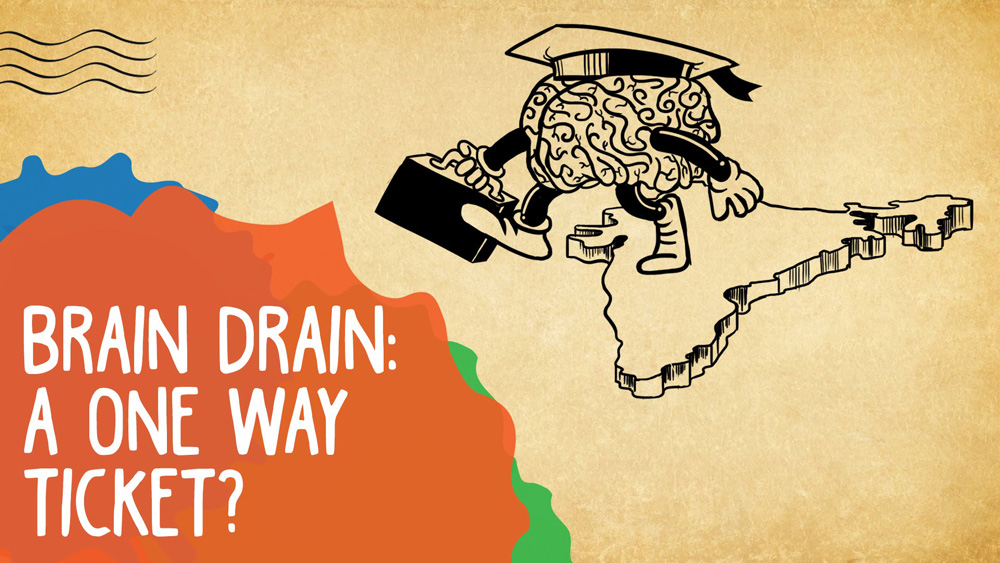
Brain-Drain- The Bittersweet Immigration.

Migration has been an existing phenomenon since the origin of man. However, in the contemporary world, there has been a lot of emerging reasons in pursuant of migration. These reasons include seeking refuge/asylum, economic growth, education, tourism, or change of environment among many others. Today, we will discuss on labour/economic mobility and or in relations to brain drain.

So, what is brain drain? This is the international transfer of resources in form of human capital. It involves the migration of relatively highly educated people from developing countries to developed countries. This form of migration is informed by better pay and a good work environment in the designated country. The individuals feel their work will be better rewarded and appreciated. They also believe they will be able to have career growth in the respective country of migration.

According to (Todaro,1996:119), he indicates that irony of international migration today is that many of the people who migrate legally from poor to richer lands are the very ones that Third World countries can least afford to lose: the highly educated and skilled. Since the great majority of these migrants move permanently, this perverse brain drain not only represents a loss of valuable human resources but could prove to be a serious constraint on the future economic progress of Third World nations. This is because these individuals contributed significantly highly to the hosting country’s economy.

The US 1990 Census revealed that there were more than two and a half million highly educated immigrants from developing countries residing in the United States. In Canada, its immigration policy they focus in getting the best in terms of human capital/resource. Emphasis has been put on the selection of highly skilled workers through a system of quotas favouring candidates with academic degrees and/or specific professional skills.

Countries like Australia, Germany, Canada, France, Belgium among others are more interested in labour mobility rather than traditional resettlement. There is more increase in labour mobility rather than resettlement of refugees, asylum seekers, and applicants seeking family reunification. This is an indication that Western countries are now learning to become quality selective. In Germany, Chancellor Schröder announced in May 2000 plans to recruit 10,000 additional specialists in the field of information technology. In France, the Weil Report on Immigration of 1997 also explicitly recommended favouring the immigration of highly educated workers. Currently, Canada is calling for labour mobility for both refugees and any interested individual around the world. This call is based on occupations in demand. The annual number of visas issued for highly skilled professionals is increasing tremendously.

(Easterly and Levine, 2001) indicates that the institutional background of the brain drain is now characterized by “demand-pull” on the side of the receiving countries, whose immigration policies are determined according to domestic needs and labour-market conditions, regardless of the consequences for the immigrants’ origin countries. Combined with traditional self-selection effects on the supply side, this leads to much higher migration rates among the highly educated and increased international transfers of human capital from developing to developed countries.

Due to the benefit foreseen by individuals and families, more people are increasingly investing in human capital because of increased migration opportunities. Migration was and is increasingly seen as a central livelihood strategy.

Is brain drain detrimental to the migrants’ source countries? How about we do a practical assessment of the economic impact of the brain drain for developing countries. Let us pick Kenya for instance (or any African country for that sake). From the respective country, select a few individuals that you know who have migrated under the context of brain drain. For me, I know of George, Bernard, Fred, Beatrice, Wendy (not their real names), and several others. They are graduates of computer science, civil engineering, doctorate, nursing, and law. These individuals have migrated to different western countries for work. They are currently practicing in their respective field and have even acquired more education in the hosting countries. They have gotten career rank, additional pay as time goes. As a result, their living condition has improved, they send remittances back home to their family and friends. Some have chosen to invest in their home countries by buying properties or starting a business for their family or themselves. These transactions translate to supporting the Kenyan economy. But at what scale or magnitude?

So, the pros of brain drain to the country of nationality include remittances, return migration after additional knowledge and skills have been acquired abroad, and the creation of business and trade networks.

The question will now be, is their contribution to the economy equivalent to the brain drain that the western countries benefit from? Is there Brain waste? I.e., Educated refugees not allowed to work, and does this brain waste a contributing factor to the brain drain?

Has the remittance by these skilled immigrants over the years significantly contributed to the elevation of people in their origin countries from poverty? Lifting people from poverty requires strong economic pillars. Creating industries that would not only compete in the international market but also employ thousands of people is one way to solve poverty issues in developing countries. But this can only be done through retaining our brilliant and smartest people. Over the year, I have noticed that it is the expatriates from developed countries working here (developing countries) are the ones setting up businesses and companies. A good number (not all) of these experts-founded ventures mostly employ fellow experts. In most cases, these companies are not sustainable and rely heavily on grant money; once the grant money dries up, so is the business. What am I trying to drive home here? Local people (particularly those smart and skilled ones being taken away) stand a better chance of creating sustainable businesses because they understand their countries’ dynamics, something that foreign experts mostly lack!

I find the perception of some developed countries on immigration as the solution to poverty in developing countries as misleading. It would have made more sense to help these smart and brilliant people set-up industries in their own countries rather than luring them from their countries. Most of these people just end up improving their own lives and maybe that of their close families (something we all yawn for), rarely do they impact the entire nation. You might be thinking ‘what about the taxes?’ The last time I checked, the government was not efficient in putting our money into good use. So, that is a no-brainer.

In conclusion, brain-drain benefits the hosting counties, the immigrate and their families (maybe), and a few government officials who benefit from remitted taxes back at home. You will have to move everyone to developed countries if you are to solve the developing world’s poverty through immigration!

Have a great week and a new month ahead, Cheers!

Communism and Socialism-treacherous and unrealistic attempt to perfection that has resulted to mass migration and refugee crisis

Before we delve into the main topic of discussion, I want you to ask yourself the following sets of questions; what is your opinion about idealism? Do you think it exists? And what about utopianism? Would people or nations realise it?

A utopia is a perfect imaginary world, it only exist in our imaginations. In fact the name literally means ‘no place’ or ‘nowhere’.  Such a world is deemed to possess highly desirable or perfect qualities and conditions for its citizens. As for ideal, it is perfection, desirable settings that are unlikely to exist in real world. With that said, a utopia is a fantasy of an ideal world!

Growing up, I dreamed and worked towards achieving such ideals. My wish was to live in a world where everything was just perfect. I must admit that a ‘man’ must try, but it only remains at trying! Because when it comes to realizing and influencing other people on such unrealistic epitomes, it’s impossible. The hard truth is that we are flawed, and achieving such perfection is almost inhuman. However, I started embracing and appreciating my own imperfections; ‘perfect in my imperfection’. We come in all shades of colours, languages, cultures, shape and sizes, so are our flaws. Therefore we should came to appreciate people for who they are and their short coming.

Okay, probably you are wondering why I have dwelled much on utopia and ideal. But I am pretty sure most of you are aware of the connection with the topic at hand. If not, no worries you are about to find out!  

We’ve all seen and heard about the alleged horrors of Capitalism from activists, politicians and movies; a story for another day. However, have we ever taken time to really understand what the other alternatives are, and capable of achieving? I am talking about Communism and Socialism. These two ideologies place great value on creating a more equal society and removal of class privilege, in theory I’d say. From the past and present evidence, they practicality is questionable!

The major difference between the two ideologies is the means thorough which they intend on achieving this equal society. For Socialism, it uses the route of democracy and liberty. This is through participating in democracy to seek an incremental reduction in inequality. Currently popularized by the west as Democratic Socialism, it infers a combination of public sector intervention and private enterprise. Whereas as for Communism, it rather takes unpopular route of totalitarianism in the bid to create an ‘equal society’. The state takes absolute control of the economy to accomplish greater equality – regularly at the expense of individual liberty.

Without attaching examples to it, can you see how ideal this sounds? An amazing and wonderful society, equal and just to all, so it seems! These ideologies sound and look wonderful on paper, and from a twisted moral point of view. But after giving it a little bit of deeper thought, are they? Should equality and justice means a doctor and a watchman get paid the same wages despite the huge difference in qualification requirements, skill-sets and complexity of work? Being forced to live the same lifestyle. This is one of the biggest fallacies of these ideologies that I keep grumbling with.

Cuba, Venezuela, North Korea and The People Republic of China are some of the nations that are practising some sort of Socialism/Communism with not so much good outcomes. Countries like India, United Kingdom and Israel equally tried too but had to drop socialism after realising that it was leading them to undesirable paths of self-destruction. The Soviet Union on the other hand, collapsed due to communism polices. Cumulatively over the years, the human race has lost over 100 million souls literally murdered by communist. Let’s analyse the situation in a few of the above counties.

Communist China

Let’s take a peek onto the reign of the chairman of Chinese Communist Party, Mao Zedong, who took power between 1949 until his death in 1976. During this period, it is estimated that at least 10 million people died between 1958 and 1962 from starvation. This was due to the famine caused after stagnation of farming industry as a result of collectivization, as opposed to the heavy industrialization and population growth. Despite all these deaths, Mao chose to do nothing to help but to blame counter revolutionaries for allegedly ‘hiding and dividing grain’. The accused were in great trouble! 

Horrific stories of human cannibalism were reported; farmers killing and eating their own children. According to the latest records, the total number of people who died during this period is about 45 million. Of which about 8% were tortured then killed by the government, 2% committed suicide whereas 5% died in Mao’s labour camps labelled “enemies of the people.” One of the commanding officers stated in an executive meeting, “When there is not enough to eat, people starve to death. It is better to let half of the people die so that the other half can eat to their fill!” You can fill the blanks… It is estimated that millions of people fled China during this period resulting into a massive increase of refugee population in the world.

China as of late changed tactics. It has given more liberty to its citizens to trade and own enterprises. This has led to rapid economic growth over the last decades. However, the communist grip is not gone. The country actively monitors how you behave, dress, what you eat, who you marry, social media activities, what you write and say in public, literally everything. They have alternative to all the popular social media used by the rest of the world which they are barred from using; Facebook, twitter, Instagram, snapchat, WhatsApp name them and even their own invention Tiktok. All this adds up to individual social credits setup by the government.

If you behave contrary to the set standards, you earn a ‘low social credit’. If you are detected or rather seen to be jaywalk it leads social credit deduction and instant fines. If a pregnant woman is spotted buying or drinking alcohol, she faces the same consequence. This will have implication since you will not be allowed to get services like acquiring a loan, you will not be able to move out of China and even using their modern bullet trains. All thanks AI cameras and facial recognition technology, all you do is under surveillance! There has been protest from Hong Kong against these outrageous enforced practices. This has led to a number of residents from the region fleeing to other countries.

After suffering under Soviet Union, Mongolia is deeply suspicious of Communist China. With the country small population and rich in mineral resources, it is constantly under constant influence economically, culturally, and politically from China. Mongolians do not want to throw their 30 years of independence and democracy back to the control of a communist regime who are interested in exploiting their resource. They are in continues tension to resist all influence from communist China. Some of them have resorted to feeing to neighbouring India just to escape this building tension.

Soviet Union

Communist Soviet Union also faced similar fate during Stalin’s regime. It is estimated that over 10 million died directly or indirectly from famine which ravaged Soviets. However, this number might be much higher due to lack of records. The famine was mostly due to forced collectivization of agriculture, forced grain procurement, rapid industrialization, a decreasing agricultural workforce, and a several bad droughts.

Even worse, the hard working farmers, the Kulaks, become a target. Stalin order that the Kulaks to be liquidated as a class, which is illegal. Henceforth, everyone who owned land was branded a Kulak and an enemy of state. Most of these hardworking farmers were either arrested, deported, or executed. The lucky ones gave up farming to avoid arrest or just fled. The aftermath was drastic drop in productivity and food production.

The Soviets were also big in labor camps famously known as the Gulag. All the perceived enemies of state were sent to Gulag. Each Gulag- which were in hundreds- held anywhere from 2000 to 10,000 people. You were required to work for up to 14 hours a day whatever the weather. Many died of starvation, diseases or just exhaustion-while some were simply executed. During 1941 and 1949, nearly 3.3 million were departed by Stalin from Siberia, and the Central Asian republics. By 1991 the total recorded number of people who either fled or deported stood at 9 million people; one of the largest and complex migration ever faced by international agencies.

Cuba

Contrary to the shiny depiction of Cuba in current pop culture, the reality is much darker! Ever since the regime took over in 1959, things haven’t looked up for the citizens. At least 14,000 Cubans had been shot dead by death squads by 1970’s in the bid to prevent anti-communist resistance. Cumulatively, over 100,000 have died or killed as a result of the revolution. Cuba also established a Gulag-style concentration camps. With over 300,000 Cubans being detained in this camps by 1961.

This Cuba under Fidel Castro, was marked by executions, political prisoners, surveillance, and censorship. Books, newspapers, radios, televisions, music, and films are heavily censored by the government until now. The Cuban people are generally poor a part from few government officials and cunning individuals. Some of which have set-up a thriving underground parallel economy backed by American dollar and tourism. More than a million of Cubans have taken to leaky boats risking drowning to flee poverty, stagnation and claustrophobia.

In Cuba, a government doctor and a security guard would easily live the same lifestyle. Despite their huge disparity in nature of work. A good number of Cuban doctor in Kenya are so happy living and working here because they are away from such an ill practice. As much as a good chunk of their earnings are remittances back to their government, they find living abroad more peaceful. They are able to live in a good housing and live a life they desire.

Did you know that in Cuba they are even restricted on the kind of food they eat? It is illegal to eat meat burger. The stores stock is controlled. So with living out of their country, they have liberty to enjoy a yummy juicy meat burger and a cold glass of coke! These are some of the reasons why many people are risking their lives to flee the country and never to look back.

Venezuela.

Venezuela is a sad story! Once a promising Latin America Country with large oil deposit, now barely a shadow of its former self. The trouble began ever since the country started embracing socialism ideology to combat social and economic evils. The opposite has however resulted from this attempt. The widespread nationalization of private industries, currency and price controls, and fiscally irresponsible expansion of welfare programs were an embodiment of the new regime.

Chavez, the president, started nationalizing the agricultural sector, hypothetically to reduce poverty and inequality by taking from the rich landowners and giving to the poor workers. Until 2016, this regime had robbed over 6 million hectares of land from rightful owners. This action however led to a rapid drop of the food production by 75% in just two decades, whereas the population rose by 33%. You can fill the blanks…

This was quickly followed by nationalization of electricity, water, oil, banks, supermarkets, constructions, and all other crucial sectors. After which the government resorted to increasing payrolls and giving away products at low cost, resulting into days-long countrywide blackouts, frequent water shortages, falling oil production and bankrupt government enterprises. It was all unsustainable, but they still insisted. In addition, the socialist government went ahead to implement price ceilings of hundreds of basic products like meat, milk and toilet paper. As a result more people were willing to buy but the companies could not make any profit thus stopped producing leading to acute shortages.

The country is currently marred with corruption, violence, shortage of all basic products, infants are dying in the hospital due to power outages, and people are starving. The government is also allegedly doing targeted execution of protestors. The Geneva special forces- the death squads- killed over 9000 people for “resistance to authority.” About 6 million Venezuelans have so far fled the country creating a refugee crisis in the neighbouring countries.

Other Countries.

Its common knowledge to us what is happening in North Korea since it was taken over by Communist regime. And the thousands of people who have and are still fleeing the country or have died trying to escape. Other communist counties like Laos and Vietnam have had their share of troubles which has contributed to the huge numbers of refugees. Countries which have tasted socialism like Portugal, Sri Lanka, India, Guinea-Bissau, and Tanzania. Many if not all of which have abandoned the ideology and have so far liberalized their economy and politics. They add to the evidence that theses ideologies are unsustainable and unrealistic and only leads to pain suffering and forced migration.

Some people argue that the Scandinavian countries (Sweden, Switzerland, Denmark and Norway) are doing well overall and yet they practise socialism. This is a paraded lie. These countries are fundamentally free-market capitalists. They just have augmented social schemes. These heavy social welfare schemes are funded through heavy taxation. These countries have been continuously stressed against other countries referring to them as socialists because they are not even close.

Conclusion

Human beings naturally are designed to be competitive in nature. They want to belong to a society where there is a free market. They are motivated by making profit and improving their lives. This is an ideology that cannot be achieved through socialism and communism. Even with the rebrand of socialism to democratic socialism to give it a flashy look, the reality is the two system will fail and there will be no progress to life of human. Migrants from Cuba, Venezuela and other socialist countries who are living in U.S have been on the forefront warning U.S not to adopt this form of legislation. Since they know the effect of it. The generation that is advocating for this system of government is an entitled generation who wants to reap where they did not sow, the young population in US are pro socialism.

There can never be equality of outcome without totalitarianism. A liberal and free people cannot achieve equal outcomes, human nature and the huge diversity makes it impossible without use of absolute force. And this is the greatest flaw of socialism/communism. If attempted, people will flee in such of a better life. That is why these ideologies have and are still fuelling mass migration away from them!
Being a Refugee in the Middle of a Global COVID-19 Pandemic

The date was 15, March 2020, just a few days after the first official COVID-19 case was announced in Kenya. We are glued to our devices anxiously watching our president, Uhuru Kenyatta, gives directives! This was the first steps towards shutting down the country to help curb spread of this novel virus. Travel from any countries with any case of the virus was restricted. Only Kenyan citizens, and any foreigners with valid residence permits was to be allowed into the country provides they self-quarantine. All schools and higher learning institutions were to be closed by March 20. Government and businesses people were to start working from home; except essential services. Cashless transactions over cash. No congressional meetings- weddings, malls, night clubs, churches, limitation of hospital visits. Hospitals and shopping malls to give soap and water/hand sanitizers, and regular cleaning facilities. These were among the first directives given with more stringent directives to follow as we counted more days and more numbers into the pandemic.

The cases rose steadily but way below the projections. By June 6 we had only 2,474 recorded case of the virus in the county. The suspicion was that there were more cases of people with the virus walking around potentially spreading it unawares. This is due to the fact that majority of the cases were asymptomatic, they exhibited mild to no symptoms at all. At this time we had lost 79 people to the virus and had a total recovery of 643. The president decided to extend the directives on cession of movements to and from worst affected regions- Nairobi Metropolitan Area, Mombasa County and Mandera County.

To compliment what the government was doing, serval organizations and enterprises chirmed in to offer assistance. This came in the form of financial support, sanitation facilities to ensure that there was regular washing of hands, provision masks, soap, hand sanitizers and food baskets, and sensitization of preventive measures.

I watched, observed and learned how the pandemic was quickly unfolded and racking havoc into every inch of the fabric of our society. “What is going to happen to those individuals whose situations wouldn’t allow them to follow the WHO guidelines” I pondered helplessly. “What about the slum dwellers? How would they afford the ‘luxury’ of social distancing?” Majority of these people live on hand to mouth, they have to work daily to get something to fill their belly. How was ‘work from home’ directive supposed to apply for them? There were two choices here; stay at home and die from starvation or risk your life and get some food for your family. Honestly speaking, this wasn’t even a dilemma!

As for the refugees who I worked with, the situation was even dire! A few, their already bad situation were made worse and couldn’t take it anymore and decided to end it. This was the case of a refugee who committed suicide just next to UNHR office. Sources claimed that he wasn’t able to fend for himself despite all the effort he had made driving him to depression. So death was the way out. How tragic! There has been a reported surge in suicides during this period, however it is not attributed fully on the pandemic.

Put yourself in a refugee shoe for a moment! You fled your country due to a well-founded fear. You ran away from a civil war or famine in your country- say South Sudan, Somalia, Ethiopia or even DRC Congo. In your country of aslum, you are barely surviving. Securing a formal job is just a distant dream in your head. You don’t have papers that is the first problem beside the subtle discrimination you constantly face. But if you are lucky to get any form of job, you are vulnerable to exploitation. Besides some of your employers might feel they are just doing you a favour. Above and beyond, there is little you can do. You are just a helpless foreigner with no say! Doing business is also difficult, remember you have no papers. Getting a permit is impossible so you have to operate illegally. This means that you’ll have to pay hefty brides. At the end of the day regardless of your employment choice, you’ll get paid peanuts. Then COVID strikes amidst all this relaying challenges!

Eastleigh-Nairobi, a place where a good number of households are Somali refugees was suddenly shut down. Without warning. All the businesses were closed, no more work, nowhere to go in a foreign country. In just a few days you’ll have depleted all your surplus. You’ll have to face two monsters; the virus and starvation. Just when you thought there was an alternative, you get hit by reality. You can no longer seek odd jobs in people houses for a few coins or in exchange for food. Moreover people being extremely cautius of the virus, they fear letting strangers into their homes during this period. Everything seem at a standstill- the barbershops, hair salons, the local pub, local eateries, and local boutiques. All possible source of livelihood!  If it hard for native citizens what about a refugees, migrants and asylum seekers who depend on locals?

 Most refugees and migrants depend on daily wages to get by. They do not have access to proper social security schemes which can cover them during these hard times. Thus income loss renders refugees and migrants incredibly vulnerable. As a result, the impacts would be the inability to afford basic goods, increased worry and anxiety, inability to pay remittances, and inability to continue their migration journey. In orders to survive, some have resorted to negative coping strategies, such as selling their clothes and phones.

As refugees and migrants increasingly struggle to make ends meet, the consequences are also felt by their families and communities in countries of origin. Most of these refugees still send money back home to their relatives or friends who stayed behind. The World Bank estimates that global remittances will fall by 20% in 2020 due to the economic downturn triggered by the coronavirus pandemic and migrant workers’ loss of income and jobs.

For the few lucky refugees who had been getting support from NGO’s and individuals. This support has either been reduced immensely or cut off entirely! The NGO’s themselves have been struggling to stay afloat during this period too. The shift in focus due to the crisis has resulted into majority of the donors reducing their fundings or withdrawing their support entirely. This is how far the ripple effect of what Covid-19 has bought us. Beyond the immediate health crisis, COVID-19 has also severely impacted the world economy, and economic recovery is expected to be slower than anticipated.

The biggest perceived barriers to health services cited by surveyed refugees and migrants differ between regions but overall relate to lack of funds, not knowing where to go, and discrimination against foreigners. It has been feared that the vulnerability of refugees and migrants to the coronavirus would be exacerbated by barriers to health services. For refugee camps, a COVID-19 outbreak could exhaust the already inadequate medical resources and overwhelm camp hospitals like Dadaab and Kakuma refugee camp.

Since the beginning of the public health crisis there have been concerns around whether refugees and migrants can adhere to recommended measures to help prevent transmission of the virus. As many along various stages of their journey may find themselves residing in camps, shelters, or detention centres, and facing overcrowded and insanitary conditions. Such places adhering to the recommendations is far from practical. So in a scenario where Covid hits-which is not a matter of ‘If’ but ‘when’- it’s going to be a mess!

Unsurprisingly, more and more surveyed refugees and migrants have also reported increasing stress and anxiety. As refugees and migrants lose their incomes, many seem to be faced with the dangerous choice between poverty and illness.

The refugees on transit from their home countries haven’t been spared at all with the pandemic. Getting to their destination country to seek asylum has gotten twice as difficult. A part from just the fear of contracting COVID-19 along the way, most of the countries have closed their borders in the bid to curb the virus. This has come with it the opportunity for exploitation by the boarder officers. Most migrants would be willing to pay all they have just to be allowed in.

In addition, for those who manage to get in, they are likely to face a much more pronounced discrimination than they would have faced before the pandemic. Since as a foreigner you are constantly under suspicion of carrying the deadly virus. The result is potential outbreak of a second virus, xenophobia.

For those refugees who were lucky to be among the quota set to be resettled in a third country (western countries), things haven’t worked out as planned either. Due to the current state of affair, this arrangement has halted for now. Their fears and anxieties are real, for they feel that their only chance of turning a new leaf might just have been dusted. Even worse, some had even sold their households items and ready to depart but Covid-19 happened. What keeps them is hope that this current status will be dealt with and they can finally depart.

There is dare need for assistance to refugees. Food to eat, a place to reside, and healthcare for a start is basic need for them at this point. Moving forward, countries should looking into their policies to allowing refugees to have equally access to training, job and business opportunities. For people within work age bracket, they should. This will not only benefit them in terms of earning a living and feeling socially secured but it will also be a plus to the country since they will contribute to the growth of our economy.

With these struggles, I believe there are some refugees who thinking of returning back home. They feel that maybe there they would be in a position to meet their daily needs. This despite still having the well-founded fears of persecution. They feel they are still undergoing the same torture through hunger, deteriorating health, homelessness and anxiety which might lead to depression, illness and even death. However going back is equally hard due to the closed borders. On the other hand not being able to afford acquire COVID-19 certificate for international travels. The issue of documentation is equally key when crossing across border which for sure most lack. Majority are thus risking unpleasant detention and deportation in this attempt. So clearly this is also a dead zone to explore.

With a prolonged COVID-19 pandemic in sight, we expect further deteriorating of socio-economic conditions, protracted displacement and the critical shortfall in solutions to displacement are leading to widespread despair among refugees. Many refugees say they see their futures crumbling. The issues that drove them from their countries remain unresolved and they can’t return home. Many who have survived in exile by eking out a living in the informal economy have lost their jobs. They are also anxious about their health and that of their families, not knowing when the pandemic will end and how they can really protect themselves. They see a lack of solutions and lack hope in the future.

In the mix of all these, millions of refugees worldwide are still exposed to violence, family separation, culture loss and exile. The COVID-19 has further exposes these populations to a new threat, one that could prove to be more devastating than the events forcing them to flee their homelands. Moreover, just as I had highlighted earlier, the COVID-19 pandemic has strained the finances of governments, nongovernmental organizations and humanitarian agencies that serve refugees.

Despite COVID-19 pandemic exposing systems of inequality, it was still met with delayed responses by public health authorities to address the needs of the most vulnerable. Humanitarian agencies serving refugees emphasize the importance of global support for the receiving countries so they can continue their efforts of solidarity, medical care and economic support. Hence, I strongly endorse The Lancet’s guiding principle of public health networks leaving no one behind during the COVID-19 pandemic. Recommending epidemiologic risk assessments and the timely deployment of outbreak response teams within refugee camps, promoting health education in a culturally sensitive manner and ensuring healthcare access without refoulment for refugees.

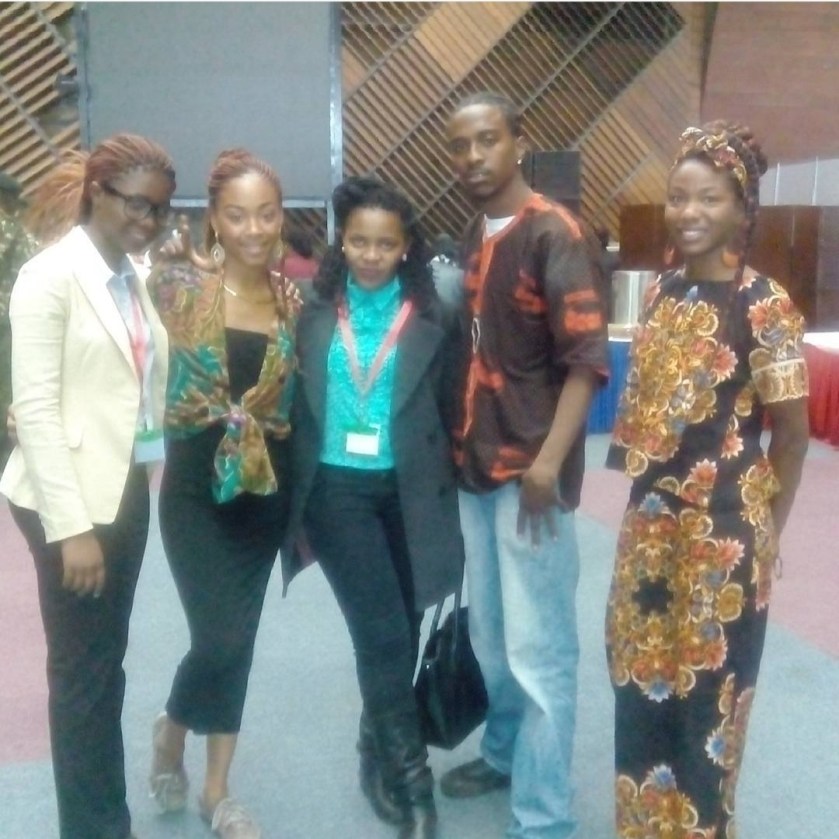
Pan-African Conference-Memoire (August 2015)

I was so excited that I was part of the team that was coordinating and facilitating the Pan-African conference. This was so fulfilling in all angle. One it was fulfilling being that I was an IR student, this was so relevant to my course, and I was getting an opportunity to have a physical feel of diplomacy, integration, foreign policy and many other aspect of my course. I was going to interact with diplomats, Head of States, dignitaries, politicians, fellow like-minded people who inspire to advance their career in the IR world. Secondly, I was being paid for the services that I will be offering. I had already planned for that cash. Apart from spending the money in getting myself new outfit, the most valuable thing I used that money for was to apply for my Kenyan passport. A diplomat in the making must have a passport!

The other exciting bucket list that I was checking was the fact that I was going to spend a whole week in a five star hotel. I had such an amazing experience. And to make it even sound more enjoyable is the fact that I had earned it. Like it was through my appointment to facilitate the event that had earned me such an opportunity. You clearly don’t know how many offers I turned down from ‘men’ offering to take me to Kepinski and the likes and even vacation to the coast. I really wanted to have those experiences but I just could not allow myself to have it from them. I did not want to feel vulnerable to someone. I always convinced myself that I will afford and earn those experiences through my hard work. I would constantly repeat to myself “it is just a matter of time and I will be able to afford all the luxury that life has to offer. But for now, I am contented with my life as it is.”

Like they say, your network is your net worth. I was eager to create a great network during the conference. I had also challenged myself that I will participate during the conference. This was to have my voice be heard in what I felt that Africa as a continent was doing wrong when it comes to Foreign Policy. My key point was on South-South Relation. I do not embrace it. African countries just blindly adopted the engagement without paying keen attention into the policy of engagement. The Chinese came up with all the rules of engagement and all we did was to ratify it without giving our input. This is a sad affair. We were fooled with the non-interference policy which is not true. By all facts, China, Japan are interfering with our sovereignty as a country, In Kenya, we have given our port as a security for the loan that China has given us. In the construction of different highways, road and even the railway line they are bringing raw materials from their country yet we have the same material in our country. This means we are subjecting our local market to die. They are also carrying labour from their country in the name of expatriate yet we have able engineers and all relevant task force to accomplish the same task. 

I was going to make myself be noticed. I remember during my contribution in one of the forum, one gentleman came telling me that he sees a great potential in me. That I need to just establish what it is and then pursue it. (I wonder why people who normally tell you such kind of statement don’t objectively tell you that this is what you are good at, so work towards it.) You just have to figure it out yourself.

I was also going to face my fear head on. Stage fright. I am still timid when I am communicating to an audience. This is still work in progress, I will soon overcome it and have the confidence while at it.

This has been between me and self. I can’t believe that I am opening up to something that I wanted to be just be known to one. This was the first time I ever stepped at the airport. I had just seen airport on movies and how people hold those boards with name written on it at the…. To pick their visitors. I was the usher in charge of receiving all delegates to the country. I was to pick them to the airport and take them to their respective hotel. This was awesome. I enjoyed the task. I was finally experiencing only what I had seen on moviesJ do not laugh that much, in the same year I did border a flight. I experienced so many blessings in that year.

In my stay at Sarova, I ensured I enjoyed all the facilities they offered. From swimming, the gym, steam and Sauna, to massage and food and all the room services. How will you know that a villager takes an awesome utility of the opportunity offered? I even brought my friends to enjoy the experience with me… Hahaha

During the conference the discussions were on  policies that would ensure that Africa as a continent voice is heard and respected in the International real politics in order to neutralize the forces of neo-liberal globalization, which favours capital and markets. This was to be achieved through strategizing on how to achieve self-advocacy, access to justice, political participation and post-2015 development. There were dialogue on what self-advocacy networks that Africa has, the tools or resources needed to build and sustain self-advocacy networks. In my opinion the event was chaotic to me with nothing amicable that was agreed upon, only battle of ideas. It was full of politics with everyone insisting that their view was to be adopted. There was also no proper means/tool that was established to ensure that the policies would be implemented and also any measure for accountability. Our leaders were just there to be seen with minimal contribution to the discussions. At least I got to take selfie with them huh!

Pan African Congress sought to address issues relevant to Africa today: youth unemployment, the environment, the abuse of women and girls, the continued exploitation of Africa’s resources; the role of the Africa Union in the march towards continental integration, and regional economic blocs. In the era of the social media, the Movement is presented with unique opportunities and challenges to use these platforms to improve communication; re-brand itself in a progressive light and help to create the new Africa. These require new methods of mobilisation to engage as many forces, factions, and groups as possible. The Movement must re-awaken Africa. The movement should speak truth to power.

LGBTIQ: Challenging the cultural norms

It was one of those regular Thursday evenings, so I thought. I was done with my hustle for the day. But I wasn’t heading home just yet, I had to rush to Alliance François! No, I was neither going to take French lessons nor watch French plays, I was up for something else. An event organized and facilitated by Heinrich-Böll-Stiftung. Despite being principled, I also keep an open mind. So that’s why I was there by the gate 5 minutes late but wearing an enthusiastic face. I quickly registered my details by the ushers’ desk, picked a brochure in the process then walked in into the semi-lit auditorium. The mood seemed set, this was it!

I had gotten the invitation sent to me earlier via email, and I just skimmed through it. The email highlighted an event about LGBTQ community in Kenya by then. But as I write this, the community has expanded to more letters, LGBTIQ+, as more classes have be included. I hope I haven’t excluded any letter, if I have my apologies. I suppose more letters will be added even further since more classes are now emerging.

By then an International Relation student, I thought the event was relevant in my field of studies. With little preparation, I was a blank book ready to soak up as much information dished out in the event as possible.

In my innocence, I was only aware of existence of gay and lesbians being subtle mainstream in Africa if not Kenya. The rest of what the letters symbolised, I knew were only a western world’s reality, so I thought! I settled down, just in time for the discussion to commence. The moderator introduced himself and the panellist. It was at that moment that I had my first rude awakening on this matter!

LGBTIQ+ just to clear things up in a layman’s language, are people who have identified themselves as lesbian, gay, bisexual, transgender, intersex, or questioning. We will narrow in on the above terminologies later on.

But first, it’s time you knew that sexual orientation and gender identity/expression are related, but they are also separate and distinct. I know most of us are taking this terminologies seriously for the first time since we have so far never needed to.

To begin with, sexual orientation is a persistent emotional, romantic, sexual or affectionate attraction towards another person. It is easily distinguished from other components of sexuality including biological sex, gender identity-the psychological sense of being male or female; and the social gender role-adherence to cultural norms for feminine and masculine behaviour. That’s a mouthful, take your time to process!

In addition, sexual orientation exists along a continuum that ranges from being solely gay or lesbian to being utterly straight and includes various forms of bisexuality. Sexual orientation is different from sexual behaviour because it refers to feelings and self-concept. Persons may or may not express their sexual orientation in their behaviours.

Gender Identity/Expression/Presentation on the other hand, is how people see themselves in terms of gender (e.g., male, female, or something else). This is an internal identity rather than a physical one. A person’s gender identity might not match their body, presentation, or expression. For a long time those individuals who happened to have identified as something other than what their physical or biological make up represented were considered mentally ill. And even once classified as so by WHO. Despite being removed from the mental health classification, it is still a hot topic of debate and contention.

To simplify, gender expression, is everything a person does to communicate their gender to others. This includes: clothing, hair styles, mannerisms, way of speaking, adornment, etc. Gender expression can vary for an individual from day to day or in different situations, but most people have a range of expression that makes them feel most comfortable.

I hope the definitions have not confused you! Mental trick: Gender expression is to how you view yourself sexually, like are you a man/female or other while sexual orientation is feeling and self-concept, like are you sexually attracted to male, female or both!

In case you are wondering why I was shocked in the first place at the event! It happened to be the panellists! They were a constitution of lesbian/gay, bisexual, transgender and intersex. They were all beautiful and handsome in equal measure. There were these four transgender persons that really caught my attention, actually shock my entire system!

For the two who Trans-females (male to female) who identified as females were physically feminine, having curves in the right places and had nicely done makeup and hair. For the Trans-males (female-male), they were masculine, built and muscular and well groomed. I was extremely startled how that was possible. Like how did they transform themselves to look exactly like the opposite gender… in my mind, this did not add up. I was exposed to a reality that I had never envisioned. A million questions were rushing through my mind just to understand and also to imagine the body look physically.

I was still oblivious of gender reorientation therapies, hormones suppression and administration, and even gender reorientation surgeries. That these procedures would physical transform a person to look like a different gender from their biological ones!

For your sake, let’s dive in into more terminologies in the hope that it would drive away some confusion and answer the many questions you might be asking yourself right now.

Heterosexuality is the sexual orientation in which a person is attracted (affectionately, sexually, and romantically) to partners of the opposite sex. This is sometimes referred to as being “straight.” This has been considered the natural orientation that a normal person should conform to. But things have longed changed!

Homosexuality is the sexual orientation in which a person is attracted (affectionately, sexually, and romantically) to partners of the same sex. It does not include bisexual, transgender, or intersex people. This is what is commonly referred to as gays and lesbianism. This was one of the first group to fight for acceptance and recognition by the society. And has so far been accepted mostly in western cultures and even widely popularized by pop culture. Even though they exist in Africa, they are yet to be accept as a normal since the practices is still mostly a taboo in African cultures.

Bisexuality is a sexual orientation in which people are attracted to partners of the opposite sex as well as partners of the same sex. Bisexual people have often faced discrimination even within the LGBTIQ community. There are those who believe that bisexuals are in denial and are actually gay or lesbian. To avoid discrimination most bisexuals prefer sticking to heterosexual part of the spectrum!

When a person is in the process of exploring their sexual orientation, they may choose to identify as Questioning. This can be done consciously or not. Most people are still not aware of this orientation because it’s neither here nor there, confusing to most people!

Transgender or simply ‘trans’ which has and is still a big topic of debate, is an umbrella term used to describe those who transcend conventional expectations of gender identity or expression. Like any umbrella term, many different groups of people, with different histories and experiences, get associated within the greater trans community – such groups include, but are certainly not limited to, people who identify as transsexual, genderqueer, gender variant, gender diverse androgynous, etc.

Trans’ people still face the challenge of being referred to as mentally ill persons. Young children being placed on hormonal suppression drugs and some taken for gender reorientation surgeries. Has been a sources of lots of controversies, and ethical issues.

Cross Dressers are neither new nor strange to most of us. These are straight-identified males who wear women’s clothes and/or make-up. They do not identify themselves as transgender. The motivations for cross dressing vary, but most cross dressers enjoy cross dressing and may experience pleasure and comfort from it. These people are typically satisfied with their biological gender.

Drag Queens/Kings on the other hand, unlike cross dressers, are gay men who dress in female clothing for the purpose of performance are not necessarily transgender individuals. The choice that these individuals make to dress in the clothing of the opposite sex is not typically a matter of gender identity.

The same is true of drag kings (i.e., women who dress in men’s clothing) and male impersonators.

As for Genderqueer individuals, they are people who view their gender identity as one of many possible genders beyond strictly male or female. Such people feel they exist psychologically between genders or beyond the notion of only male and female. People who feel this way may or may not pursue hormone therapy and/or surgical body modification and sometimes prefer using gender-neutral pronouns (e.g. “ze,” hir”). Some people prefer this label because it is a rejection of traditional gender labels. Related terms include: gender fluid, gender neutral, bi-gendered, androgynous, or simply gender diverse.

Countries like Canada and US from resent years having been facing a lot of issues when it came to using gender pronouns. Some people have been arguing that the several additional gender-neutral pronouns are adding confusion and complex to an otherwise simple communication skill. They go further to argue that its very difficult to tell what a person want to be referred to us until it’s too late, you’ll have already utter the pronoun. And the fact that these counties are try to push into law legislations that will force people to use this ‘made-up’ pronouns, is not going well with these some people.

For Intersexed people, they are born with aspects of both female and male genitalia, often referred to as “ambiguous biological sex characteristics.” This is purely biological occurs, and this individuals have for a long time been called a freaks of nature. But with the emergence of better medical care and surgery, they are able to choose what to be. Intersexed people may later grow up to have gender identities that are the opposite of the “manufactured” sex constructed for them at birth and have feelings similar to transgender in.

As the world progresses so should we. Let’s allow people to excise and express themselves as they wish freely. As we do this, let’s also not force people into things they are not into or against their beliefs under the pretext of progression. As long as they are not undermines other people’s rights and freedom of expression. It is a free world let it be truly fee to all!

So as you can see now, it turned out to be not so regular Thursday! I have never looked at the rainbow the same way as before!